- There Are Three Chapters in This Tale
- Posts
- Everything Is Connected
Everything Is Connected
We think we are separate. That I am me and you are you. That what’s mine is mine. That love belongs. That pain is personal. That time moves in one direction. But maybe none of that is entirely true. Maybe we are not individuals as much as we are expressions. Threads of one cloth. Leaves on the same tree. Echoes from the same sound.

I am That
July 04, 2025

What we know is a drop, what we don’t know is an ocean.
This article is structured in three parts: poetic expression, personal thoughts & detailed exploration.
PART A
The Program We’re Born Into
This world runs on scripts.
From the moment a child enters, the system begins writing its lines:
Be a boy. Be a girl. Be good. Be useful.
Don’t cry too much. Don’t speak too loud.
We are not born free.
We are born into stories.
And unless we unlearn, we never know we’re inside one.
The “illusion” is not just a mystical idea.
It is reality for most people.
A deeply coded operating system
fed by television, textbooks, traditions, trauma.
And if you never pause to ask why, you never see what is.
Shaped Across Timelines
You are not only the product of your choices.
You are the echo of your bloodline.
Your nervous system carries data from generations before you.
Your fears may not even be yours.
A child raised in chaos learns to call it normal.
A girl punished for her voice learns to silence herself.
A boy denied softness becomes addicted to armor.
We are born with open hearts,
then shaped by touch, tone, environment,
until we begin to believe we are our reactions.
But you are not your wounds.
You are the witness beneath them.
Environment as Architect
The mind doesn’t grow in isolation.
It forms in response to what it is exposed to.
Trauma. Silence. Warmth. Neglect.
Everything leaves a print.
And yet, within us all, there is a strange spark-
the part that observes the whole show.
The part that knows something isn’t quite right,
even when everything looks “normal.”
The system can write your code.
But the soul can rewrite it.
Duality, Emotion, and Memory
Truth and lie. Good and bad. Inside and outside.
What if these were not opposites, but mirrors?
What if the space between them is only noise-
a mental echo of polarity, not essence?
Masculine and feminine energies.
We are born with them in different balances-biological, emotional, ancestral.
Emotions shape memory.
Memory shapes identity.
Identity shapes illusion.
But no matter how strong we pretend to be-
we feel.
We love. We break. We bleed meaning.
Emotion is not a weakness.
It’s our compass. It lets us tune into the frequencies of others
who are vibrating on the same note in the same timeline.
The Spiral of Time and the System of Control
Time feels linear.
One day, then the next.
But is it?
Or are we in a spiral?
Recurring loops? Repeating karmas? Echoes living again in different skin?
We are part of a system that self-creates.
We think we make choices.
And yes, we do-on the micro level.
But zoom out-
The patterns are familiar.
The roles are familiar.
The feelings are... déjà vu.
Everything is moving as it must.
Maybe not controlled. But choreographed.
Some call it fate. Some call it code.
Some call it God.
The Illusion of Knowing
The human mind is a miracle,
but it’s not built to hold everything.
We reach, we grasp, we study, we seek.
Still-we never arrive at “all.”
We aren’t meant to know everything.
We’re meant to feel it.
To experience it honestly.
To be real. To be true. To be present.
But even that, we rarely do.
Where did this begin?
Where does it end?
No one knows. But everyone’s running.
The world keeps whispering-
more, more, more.
New goals. New heights. New selves.
But what if what we need is not more-
but closer?
Not higher, but softer?
To feel.
To be kind.
To stop pretending.
To return to what is real.
The Pattern That Repeats
Everything is repeating.
Everywhere.
Always.
The faces change.
The names. The cities. The wars. The words.
But the feelings?
The longing. The ache. The hunger to be seen.
That hasn’t changed in thousands of years.
Across timelines, across lifetimes-
people fall in love, lose it, search for it again.
People betray. People trust. People hope. People fear.
It’s all happening.
Again. And again. And again.
Not just in one life-but in many lives.
At the same time.
You’re not the only one going through this phase.
There are others-
in different bodies,
on different streets,
in different languages-
feeling the same wave as you.
Different lives.
Different stories.
Same essence.
Alone Together
We say we are different.
But we’re not.
We are all souls-
experiencing life at different frequencies (emotion)
in different journeys (timelines).
Still, we often feel alone.
Alone in a crowd.
Alone in a conversation.
Alone in a life full of noise.
But that aloneness is part of the spiral.
It pulls you inward-
toward the still center
where you remember:
Everything is connected.
Who Are You, Really?
We keep asking, “Who am I?”
But to define is to limit.
You are not just your name.
Not just your memories.
Not just your roles.
You are the frequency behind your voice.
The stillness behind your thoughts.
The silence that watches it all.
And when the mind quiets-
you hear the heart.
And when the heart speaks purely-
you’re hearing the soul.
That whisper, that nudge, that pull-
it isn’t random.
It’s alignment.
You don’t have to force the path.
The soul already knows.
The truth is a strange thing. You can try to suppress it, but it will always find its way to the surface.
PART B
We truly are stardust

This hit me hard when I first heard it. We are not just some accident. We are literally made of star particles carbon, iron, oxygen - all formed in explosions billions of years ago. That same material shaped our bones, our breath, our heartbeat.
I mean, think about it. We walk around acting like we’re separate, alone, fighting our own battles - but we’re fragments of the same cosmic event. That truth doesn’t just sound poetic - it’s scientifically real.
This changes everything for me. It dissolves the walls. It brings a strange peace. Because if I’m stardust and you’re stardust, how could we ever be truly apart?
We’ve always belonged.
Connections at every scale
Everything is tied together. Nothing is random.
From the way atoms bond to the way trees grow to the way heartbreak teaches you to soften - there’s a thread through it all. Even the tiniest movement, like a breath, has ripple effects across space, time, people.
I used to think small decisions didn’t matter. But now I see: every choice we make is like a pebble dropped in water. One ripple touches another. It keeps moving.
You smile at someone. They carry that light. They pass it on. You never know how far it goes. We’re part of a system so sensitive and intricate that even silence can change things. That’s why we need to stop pretending we exist in isolation. We don’t.
Awareness as the link
The only way to really feel this connection is to become aware of it.
Not just in theory - but in practice. In your eyes. Your listening. Your choices. Your pause before reacting.
Awareness is what shifts your focus from “me” to “this moment.” And that’s where the connection lives. It’s not in overthinking or controlling. It’s in witnessing.
When I slow down, I see more. I feel more. Even discomfort becomes data. Even pain starts to feel like a teacher.
We are all swimming in the same field - but the ones who learn how to see are the ones who start to align.
Knowing vs. Learning
“Knowing is the enemy of learning.”
That line changed the way I move through life.
We think we know. We’re desperate to know. But the truth is - we’re scared of not knowing. That fear makes us cling to ideas. Labels. Opinions. Plans.
But real growth comes from curiosity, not certainty.
I had to unlearn so many things I was once proud of knowing. And it hurt. But every time I dropped what I thought I knew, life showed me something deeper. Something more alive.
If you’re too sure, you miss the dance.
Learning is about staying open. Staying available. Letting truth surprise you.
The only true wisdom is in knowing you know nothing.
Practical Integration
What’s the point of all this if we can’t live it?
The more I learn, the more I realise how much I don't know.
That’s where it hits home for me. It’s not enough to say “everything is connected” and then go back to living in chaos or ego.
This awareness has to become part of how we build things. How we show up for people. How we forgive. How we create teams. How we slow down in a fast world.
For me, it means being more intentional with my work, more honest in my relationships, and softer with myself.
We don’t need a revolution outside. We need a shift inside. And when we start living from that alignment - it spreads.
Every small act becomes sacred.
Every seed becomes evolution.
PART C
We are all affecting the world every moment… we’re so deeply interconnected.
Across science, spirituality, and psychology, a common theme emerges – an underlying interconnectedness pervading the universe. Many traditions and disciplines suggest that consciousness or a fundamental unity ties together phenomena as diverse as quantum physics, the human mind, karma, time, and space. In other words, what we experience as separate realms may be facets of one “vast consciousness” or unified reality.
Let’s explore how each perspective – spiritual, scientific, psychological, karmic, and temporal – overlaps with the others, revealing a tapestry of connections.
Spiritual
Many spiritual and religious traditions begin with the insight that “All is One.” Mystics across cultures describe a state of unity in which the individual self merges with a greater universal consciousness. For example, in Buddhism and Hinduism, the metaphor of Indra’s Net illustrates a cosmos of infinite interconnected jewels, each reflecting all the others – a vivid image of a universe where each part contains and affects the whole . Likewise, the Upanishads of India proclaim “Brahman is Atman” (the universal reality is the self), implying an identity between the individual soul and cosmic spirit.
Modern thinkers have echoed these ancient ideas. Physicist Erwin Schrödinger, who was influenced by Vedanta philosophy, bluntly stated that multiplicity of minds is an illusion: “In truth there is only one mind.” . In other words, consciousness is singular and universal, with individual minds like facets of one entity. Such statements align with the monistic viewpoint of many religions (e.g. the idea of one God or one Spirit pervading all existence). In Christian mysticism, for instance, Meister Eckhart spoke of the soul’s union with God; in Sufism (Islamic mysticism) the goal is fana – dissolving the ego into the Divine. Regardless of culture, these spiritual perspectives converge on unity: the idea that at the deepest level, everything shares a single essence or consciousness.
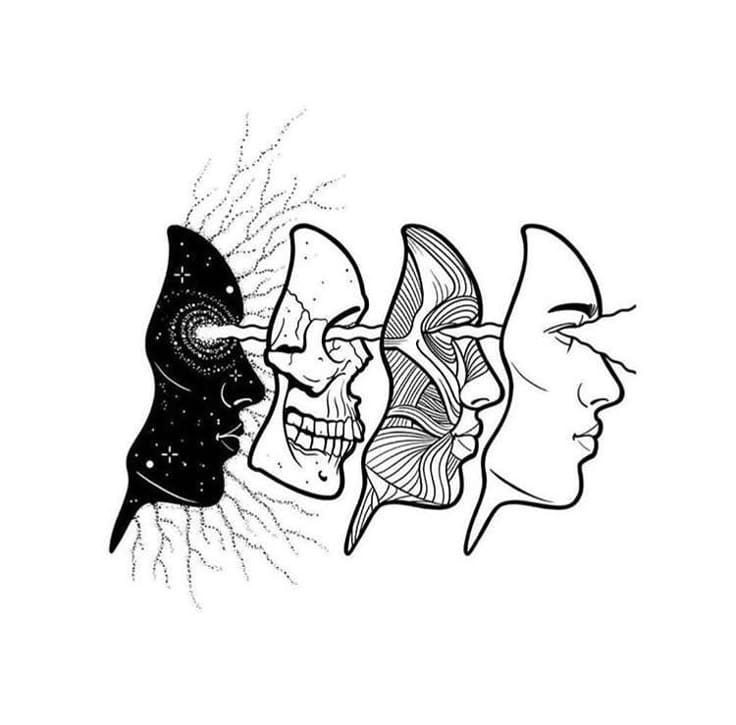
This spiritual oneness isn’t just a philosophical abstraction; it often comes with moral and emotional weight. If all beings are expressions of one consciousness, then ethics based on compassion and interdependence naturally follow.
Quantum Perspective
Modern physics – especially quantum mechanics – paints a surprisingly interconnected picture of reality that in some ways parallels mystical ideas. Quantum theory reveals phenomena that defy a purely separative, mechanistic view of the world.
For example, the principle of entanglement shows that two particles can become deeply linked such that measuring one instantly affects the other, no matter how far apart they are. This isn’t just speculation; it’s experimentally verified. Such non-local connections astonished scientists because they suggest the universe at small scales behaves as a seamless whole, not as a collection of isolated parts.
Indeed, quantum physics and spirituality both describe a holistic, interwoven universe. Both perspectives imply that what we perceive as separate objects or events are united at a fundamental level – with some even suggesting consciousness is primary in the fabric of reality.
In summary, quantum physics is revealing a relational universe. Space and time can be bypassed (via entanglement), particles have no definite properties independent of context (observer effect), and the distinction between observer and observed becomes blurry.
The Mind
Shifting to psychology and the mind, we find further patterns of connectivity. Pioneering psychologist Carl Jung introduced the idea of a collective unconscious – a deep mind shared by all humans, containing archetypal symbols and memories beyond any individual’s experience. Jung observed that people across cultures share certain symbols and myths, suggesting our psyches are linked at a fundamental level. This concept implies that on the psychological plane, individual minds are not truly isolated but draw from (and contribute to) a common well of meaning. In Jung’s words, it is as if there is a universal psychic substrate – a notion quite akin to the idea of a universal consciousness in spirituality.
Memory is another aspect where connections broaden. Typically, we consider memory personal, locked in our neurons. But some philosophers and scientists have wondered if memory could have a collective or even cosmic dimension.
In summary, psychology at its frontiers overlaps with metaphysics. The collective unconscious, telepathic experiences, and theories of extended mind all dismantle the notion of totally separate minds. Instead, they portray individual consciousness as a part of a larger network – whether that network is described in terms of archetypes shared by humanity, empathic bonds in groups, or a cosmic memory field. Thus, the psychological perspective supports the idea of interconnection, much like spiritual and quantum perspectives do, albeit focusing on the realm of inner experience.
Karma
In religious contexts, especially in Eastern traditions, the concept of karma encapsulates the interconnectedness of all actions and their effects. Karma is often described as the spiritual law of cause and effect: every action (physical or mental) we perform influences future experiences, either in this life or future lives. Far from being random or separate, our deeds create ripples that eventually revisit us. This implies a universe woven by moral causation, where nothing happens in isolation – a deed in one corner of the world (or in one lifetime) can lead to consequences in another, because ultimately all events are connected through the thread of karma.
Modern thinkers find striking parallels between karma and scientific principles. In simple terms, “karma means action, both action as cause and action as result”, as defined by Buddhist teacher Thich Nhat Hanh . This mirrors Newton’s third law (“every action has an equal and opposite reaction”), but karma operates on a spiritual and ethical plane. One way science reflects karma is through the principle of causality – nothing happens without a cause. In fact, “one way in which science is validating karma is through the study of cause and effect”, notes one essay . Our universe, as science sees it, is a vast web of causation; karma extends that web to include intention and consciousness in the loop.
Analogies to karma appear in quantum physics and chaos theory. For instance, the phenomenon of quantum entanglement (discussed earlier) shows how a choice or event here can instantaneously affect something elsewhere – conceptually similar to karma’s idea that an intention now can influence circumstances later or afar. Similarly, the famous “butterfly effect” in chaos theory illustrates how a tiny action (a butterfly flapping its wings) can set off a chain of events leading to large-scale outcomes. These have been described as physical analogues to karma’s interconnected causation. In both cases, there is an implication that small causes can have far-reaching effects, and that systems (whether particles, weather, or life events) are so deeply interconnected that one element’s change reverberates through the whole.
Philosophically, karma underscores what one writer calls “the intricate web of causation connecting all phenomena.”Instead of a simplistic reward-and-punishment scheme, enlightened karma theory sees life as an interdependent process, where each event arises from countless prior conditions . Our choices shape not only our own future but also influence the collective fabric of reality. The Dalai Lama uses a simple image: “Just as ripples spread out when a single pebble is dropped into water, the actions of individuals can have far-reaching effects.” Actions don’t occur in a vacuum; they set off ripples in the ocean of existence.
Ethically, this interconnected view fosters responsibility and compassion. If every action will eventually affect me and others (since, in a sense, others are also me at a deeper level), then kindness and harm alike will boomerang through the network of being. Even beyond morality, karma highlights connection through time: it links present circumstances to past actions, suggesting the past and future are tied in a continuum of cause/effect. This is not far from the scientific notion that the present state of the universe is the result of its earlier states (as governed by physical laws) – except karma infuses this with moral dimension and possibly stretches it across reincarnations.
In summary, karma in spirituality reinforces the theme that nothing exists in isolation. Every deed, thought, or intention is a strand in the larger tapestry of cause and effect. This karmic web joins with the physical web described by science. As physicist David Bohm insightfully put it, thinking of the world as fragmented into independent parts is misleading – “The notion that all these fragments exist independently is an illusion”, and believing otherwise “cannot do other than lead to endless conflict and confusion.”
Karma teaches the same on a moral level: seeing ourselves as separate from the effects of our actions (or separate from others) is an illusion, and overcoming it is key to wisdom. In the end, karma illustrates universal interdependence, complementing the oneness described in spiritual, quantum, and psychological terms.
Time and Space
The connection of everything extends to the dimensions of time and space as well. Both modern physics and mystical philosophy suggest that the separations we perceive in time and in space may not be ultimate reality. Albert Einstein showed that space and time are woven together (space-time), and that measurements of time and distance depend on the motion of the observer (relativity). There is no absolute time flowing uniformly for all; simultaneity can differ between observers. This already dissolves the strict separation of time periods – past, present, and future are not universally fixed. In fact, Einstein famously remarked that the distinction between past, present, and future is only a “stubbornly persistent illusion.” Physicists now discuss the block universe theory, where time is like a dimension in a static 4D block – all events (past/future) coexist in that continuum, and “flow of time” is a subjective impression. Surprisingly, mystical and spiritual teachings also claim that linear time is an illusion, and only the eternal Now is real.
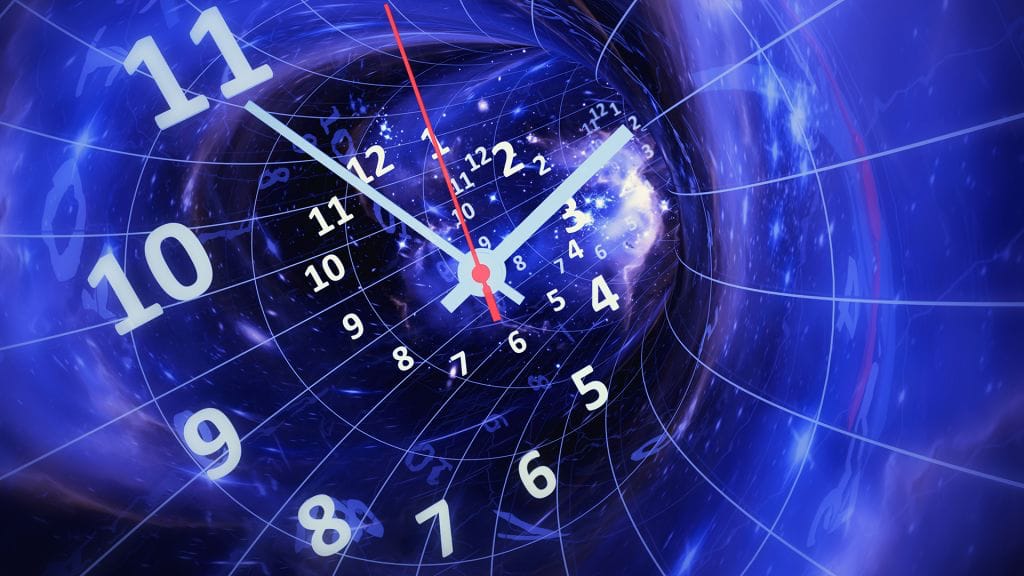
To summarise, the usual separations in time and space turn out to be less absolute when examined deeply. Relativity and quantum physics blur the clear-cut divisions, and spiritual insight outright declares those divisions to be mind-made. Everything is connected not only across space (distance) but across time – the past is intimately linked to the present and future (as karma shows, and as physics determinism or block-universe suggests). From a higher perspective, there may be
only one “Here” and one “Now” in which the entirety of the cosmos is enfolded. Our conscious experience normally chops this up into pieces (here vs there, now vs then), but both science and spirituality hint that unity underlies these apparent fragments.
Bridging Science and Spirituality
It is remarkable that such diverse fields – from quantum physics to psychology to religion – independently point toward a holistic, interconnected reality. In recent years, there’s been growing dialogue between scientists, philosophers, and spiritual thinkers about a possible unifying framework. While no single theory yet connects all the dots, the overlaps are striking and inspiring. Here we highlight a few key themes and efforts that bridge these worlds:
Universal Mind Hypothesis: The idea that consciousness is fundamental and ubiquitous is gaining traction in various forms. In philosophy of mind, panpsychism posits that consciousness might be an intrinsic aspect of all matter (so even elementary particles have proto-consciousness). This echoes spiritual panentheism (God or consciousness in all things). Thinkers like Bernardo Kastrup (analytical idealist) argue there is only cosmic consciousness, of which we are dissociated alters. Even some physicists (as noted earlier with Schrödinger and others) have entertained that a universal consciousness could be the ground of being – essentially a scientific reformulation of the ancient One Mind concept . Such views challenge the materialist assumption that mind is an accidental byproduct; instead, mind or awareness is seen as the core, with matter as a manifestation.
Interconnected Wholeness: Nearly all perspectives converge on the assertion that everything is interdependent. In systems science and ecology, for instance, we find the concept that Earth’s biosphere is a single self-regulating organism (the Gaia hypothesis). In neuroscience and social science, network theory shows how deeply connected networks (neuronal, social) give rise to emergent properties (consciousness, culture). These scientific approaches align with the spiritual notion of “unity in diversity.” Quantum entanglement, Indra’s Net, and Jung’s collective unconscious all convey a similar message: reality is a network, not islands . The parts have meaning only within the whole. This holistic principle is at the heart of many “oneness” experiences people report, whether through meditation, psychedelic states, or profound love – one feels connected to all. Science is gradually finding language for this (e.g. the physics of entangled systems, the mathematics of complex interconnected systems), while spirituality has expressed it in poetry and metaphor for millennia.
Illusion of the Separate Self: A bridging insight from psychology, neuroscience, and Buddhism is that the sense of an isolated “I” is not absolute. Research in neuroscience shows that our brain constructs our sense of self from sensory inputs and memories; it can be altered (as in phenomena of identifying with others or with virtual avatars). Meanwhile, Buddhism has taught anattā (no independent self) – that what we call “me” is a temporary aggregation of processes, not a standalone entity. During certain experiences (such as flow states or deep prayer), people report a loss of self and a merging with something larger. This deconstruction of the individual self paves the way for understanding how we might literally be parts of a larger consciousness. If our separateness is partially an illusion, then the boundaries between minds might be permeable – explaining things like empathy, collective behavior, or possibly telepathic bonds. It also resonates with physical theories that particles or objects lack independent existence outside of their interactions. The breakdown of the hard self/other boundary is a crucial step in seeing unity.
Causal Web and Responsibility: Bridging morality and science, the recognition of an interconnected web of causation (be it karmic or physical) has practical implications. If everything is causally connected, then actions cannot be taken in isolation without considering their ripple effects. This is a meeting point of spiritual ethics and systems thinking. For example, climate science teaches us that industrial actions in one part of the world affect the entire planet’s climate – a literal demonstration of interdependence. Spiritual karma teaches that cruelty or kindness will eventually affect the whole (including the doer). Both perspectives encourage an attitude of responsibility and care for the larger system. In an interconnected world, compassion is not just a lofty virtue but a logical approach, since harm to others is ultimately harm to oneself (and vice versa).
In the realm of consciousness studies, integrative theories abound. Integrated Information Theory (IIT), for example, tries to quantify consciousness as the amount of integrated information in a system – implying that if you treat the universe as one giant integrated system, it could be seen as one giant consciousness (at least in principle) . Another line of thought is quantum consciousness: researchers like Penrose, and separately others like Henry Stapp or Amit Goswami, have hypothesized that quantum processes might explain the unity of mind and matter. While these remain hypotheses, they at least offer models where mind and world are not alien to each other but deeply intertwined.
So What’s Conclusion ?
From the above exploration, a picture emerges of a reality where mind, matter, space, time, and karma are all threads in a single tapestry.
Each domain uses different language – a physicist speaks of entangled particles, a spiritual guru speaks of divine oneness, a psychologist speaks of collective unconscious, a moral philosophy speaks of the interconnected web of actions – but they are all gesturing toward the same fundamental truth: separateness is an illusion.
The universe is a unified whole, and consciousness (in some form) is a central feature of that whole.
If all is One, then all forms - even the difficult ones - are fragments of the same source.
The vast consciousness can be thought of as the ground in which the cosmos unfolds. In such a view, quantum fields, thoughts, karmic energies, and even time are expressions of one underlying consciousness-field.
All things are interconnected because at root they are that One – just as waves are not separate from the ocean. Our individual awareness may be like a single wave rising from the ocean of universal consciousness.
Science is now dipping its toe into this ocean, finding that reality’s depths are stranger and more unified than our surface perceptions.
In the words of Erwin Schrödinger, “There is obviously only one alternative, namely the unification of minds or consciousnesses…. in truth there is only one mind.”

everything is connected.
not just in poetic metaphors or passing moments of synchronicity, but in the deepest structures of existence. From quantum entanglement to karmic ripples, from neural networks to ancient mantras, from memory stored in the body to the collapse of possibility into presence, it’s all woven through one fabric.
We’re not separate drops, we’re the ocean remembering itself through different waves.
Not just minds thinking, but consciousness expressing itself through form.
So the question isn’t whether everything is connected.
The real question is — are we still pretending it’s not?
Reply